The Leadership Time Management Paradox
Feb 09, 2026
One of the most persistent tensions leaders grapple with is time versus purpose. We are accountable for outcomes, yet we only have a finite number of hours and energy. The pressure to do more, faster, louder, and better can feel like what is demanded of us as “normal”…but it’s not strategic. When leaders confuse busyness with impact, time becomes a liability instead of a resource.
Across industries, I’m seeing the same pattern emerge with leaders at every level: the pace has accelerated, expectations are higher, and many leaders are spending their days reacting instead of leading. Calendars are full, inboxes are relentless, and decision fatigue is real. Even highly capable executives are struggling to protect time for strategic thinking, vision-focused reflection, relationship-building, and values-aligned work. Without a shared framework for deciding what truly matters, urgency begins to crowd out purpose, and burnout disguises itself as commitment.
In executive leadership, time management is inseparable from task and goal prioritization. What gets your attention gets done. If urgent tasks always override meaningful work, the organization and its people become reactive, exhausted, and misaligned with mission and values.
This is where intentional prioritization frameworks come in. Learning tools for clarity, accountability, and values-aligned action are critical for being an effective leader that knows how to manage their time.
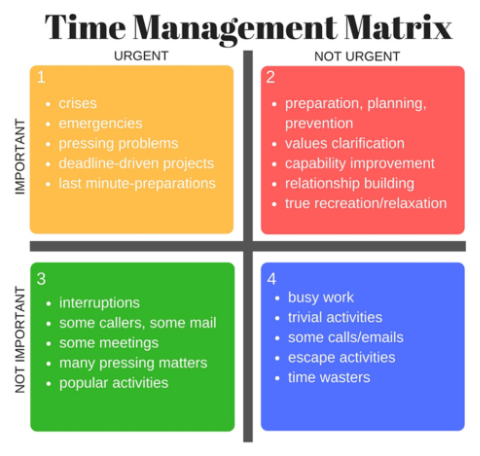
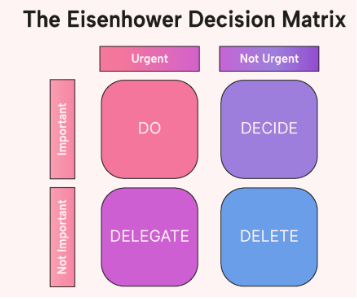
Spending just a few intentional minutes at the start of each day using the 4-Box Time Management Tool and the Eisenhower Decision Matrix can dramatically shift how leaders experience time, pressure, and impact. This practice invites leaders to pause before reacting—sorting tasks by what is important versus urgent and deciding what to do, decide, delegate, or delete. Rather than allowing the loudest demand to drive the day, leaders reconnect tasks to mission, values, and desired outcomes. This brief daily ritual helps diffuse emotional reactivity, clarifies accountability, and protects space for high-impact, not-urgent work like planning, relationship building, and strategic thinking.
Over time, this discipline builds effectiveness and efficiency while modeling healthy prioritization for teams. When leaders consistently align daily actions with purpose and values, time management becomes not just a productivity tool, but a leadership practice that fosters trust, clarity, and sustainable performance.
With time for management,
Dr. Christine
If you’re ready to deepen this work, the year-long Evolving Leader Fellowship is designed for leaders who want real tools, real conversations, and a community that practices radical care alongside strategic leadership. Or you can join us for the Rise & Thrive Women’s Retreat this April 16-17, 2026.